


Voice Input
01
A customer speaks a query into a phone, browser, smart speaker, or another voice-enabled device.
Talk to Us



AI Search
AI Platforms
Your customers are not always typing short keywords into a search box.
They are asking complete questions, looking for nearby providers, comparing options, checking availability, and using voice-enabled devices to find their next business. Devomarks helps Canadian businesses build the content, technical foundation, local signals, and business context needed to become clearer and more useful across spoken and conversational search experiences.

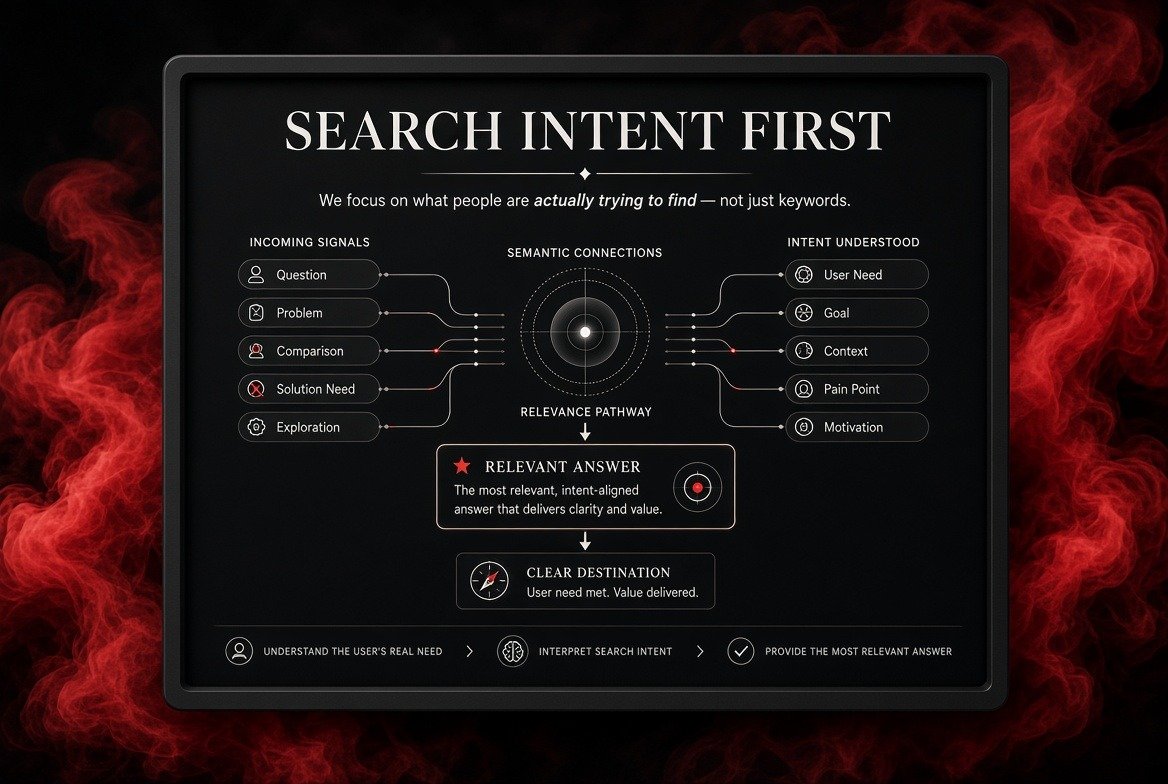
These are not just keyword variations. They express a problem, a context, a location, a comparison, or a decision that the customer is trying to make. Voice SEO helps you understand those spoken and conversational behaviours, then connect them to the right page, answer, evidence, and next action.



A customer speaks a query into a phone, browser, smart speaker, or another voice-enabled device.
A customer asks a longer, more natural question instead of entering a short keyword phrase.

A customer looks for a nearby service, location, opening hours, availability, or provider.

A device or assistant may read information aloud, but the source and selection process are controlled by the platform.

AI Overviews, answer engines, and generative platforms may summarize information, compare entities, and provide links or citations. This is connected to conversational discovery, but it is not identical to traditional voice search.
We do not treat Voice SEO as a checklist of outdated hacks. We use a structured framework that connects spoken search behaviour with your broader digital growth system.
We research the questions your audience asks about your services, pricing factors, process, locations, timelines, comparisons, risks, and next steps.
The objective is not to create a separate page for every possible sentence. It is to identify the questions that represent real search demand and meaningful business intent.
A definition, comparison, service question, local query, pricing question, and post-purchase question may require different content formats. We map priority questions to:
This prevents your website from having several pages that answer the same question badly—or no page that answers an important buying question at all.
We improve important pages so the main answer is direct and easy to find. Supporting sections then add context, examples, qualifications, evidence, and useful next steps.
Answer-first does not mean incomplete or artificially short. A good answer should be clear enough to understand and detailed enough to support a confident decision. We may improve:
Search engines and AI systems need to understand the relationship between your business, services, locations, people, industries, expertise, and customers. We review whether your digital presence clearly communicates:
This work supports Voice SEO, traditional SEO, AEO, GEO, and AI-powered discovery without pretending that one markup field can control a search result.
Important information needs to be accessible, crawlable, indexable, readable, and logically connected. Depending on your business and website, our review may include:
Structured data is used only when it accurately describes visible page content and fits a documented use case. It can help clarify information, but it does not guarantee rankings, rich results, AI citations, or spoken answers.
Voice SEO can support local businesses, professional firms, technology companies, consultants, agencies, healthcare organizations, home-service providers, and other businesses whose customers search through questions and recommendations.
Technical SEO, on-page optimization, content strategy, search intent, local SEO, authority, and performance create the foundation for discovery. Explore SEO Services →

AEO focuses on structuring useful answers around the questions that influence a customer’s decision. Voice SEO often uses AEO principles, but Voice SEO adds a stronger focus on spoken behaviour, local intent, device context, and assistant-led discovery. Explore Answer Engine Optimization →

GEO focuses on how generative systems understand and reference your business across AI recommendations, citations, entities, sources, and brand context. Voice SEO focuses more specifically on spoken and conversational discovery. Explore Generative Engine Optimization →

A search-ready website must also be fast, accessible, readable, logically structured, and easy to use. Technical foundations and user experience affect whether discovery turns into a meaningful enquiry. Explore Web Development →





Business review
Audience and market research
Customer-question discovery
Current search and content review
Spoken query research
Intent mapping
Question-to-page mapping
Competitor and content-gap review
Answer architecture
Content priorities
Entity and context recommendations
Conversion-path planning
Answer-first content recommendations
Conversational on-page SEO
Technical and structured-information recommendations
Local and business-context improvements
Search Console trends
Qualified engagement
Calls, forms, bookings, or enquiries
Local actions
Assistant-test observations
Voice and conversational search do not remove the need for trustworthy information. In many industries, a customer may ask a question before deciding whether to contact a business. Your answer needs to be understandable, supportable, and connected to a real organization. E-E-A-T is not a magic ranking switch. It is a quality and trust framework that helps your content serve real people better.
First-hand examples, real processes, customer context, and practical detail where available.
Clear authorship, qualified review, accurate explanations, and relevant professional knowledge.
Consistent business identity, useful content, credible sources, legitimate relationships, and relevant third-party context.
Transparent claims, current information, clear limitations, responsible citations, secure and usable website experiences, and no guaranteed-ranking promises.



Voice SEO is a focused application of search strategy for spoken and conversational discovery. It depends on the same core foundations as SEO—crawlability, relevance, useful content, technical quality, and trust—but adds emphasis on natural questions, local intent, answer clarity, assistant contexts, and observable testing.


No. They overlap, but they are not identical. AEO focuses on question-to-answer architecture. Voice SEO focuses more specifically on spoken search behaviour, conversational queries, local discovery, and assistant-led experiences. Both can support each other.


No. Search engines and assistant platforms control what they display. We can improve content clarity, relevance, usefulness, technical readiness, and eligibility, but no responsible provider can guarantee a specific answer, snippet, citation, or ranking.


Usually, no. Google documents Speakable as a narrow, beta use case for topical-news audio experiences. It is not a universal requirement for business websites or general voice visibility. Structured data should be used only when it accurately describes visible content and supports an appropriate documented feature.


No. Local businesses may benefit from queries involving location, distance, hours, and availability. However, professional firms, technology companies, agencies, consultants, and other businesses can also benefit from clear answers to conversational service, comparison, process, and pricing questions.

The timeline depends on your website, content, technical condition, competition, number of priority pages, approval process, and implementation scope. An initial audit and question map help determine the right sequence of work.

Yes. Voice SEO, AEO, SEO, and GEO can work together, but they solve different parts of the discovery journey. Voice SEO improves spoken and conversational readiness. AEO structures direct answers. GEO strengthens broader AI visibility, entity context, citations, and recommendations.
Your customers are asking questions across more than traditional search results. Build a digital presence that answers them clearly, connects discovery to action, and gives people a stronger reason to trust your business. Tell us your website, market, priority services, locations, and three questions your customers ask before choosing a provider. We will identify the most relevant Voice SEO opportunity and explain the next step.